CASTING – personality
Marco is a naturally magnetic, camera-ready performer whose strength lies in authentic, unscripted human connection. With a background spanning television presenting, comedy, and live performance across the UK, Italy, and internationally, he brings the rare combination of a talk show host’s instinct for reading a room and an actor’s ability to inhabit a character with complete conviction.
Equally at home in improvised scenarios and structured performance, Marco thinks fast, reacts naturally, and generates genuine energy without manufactured effort – his presence is felt without being forced.
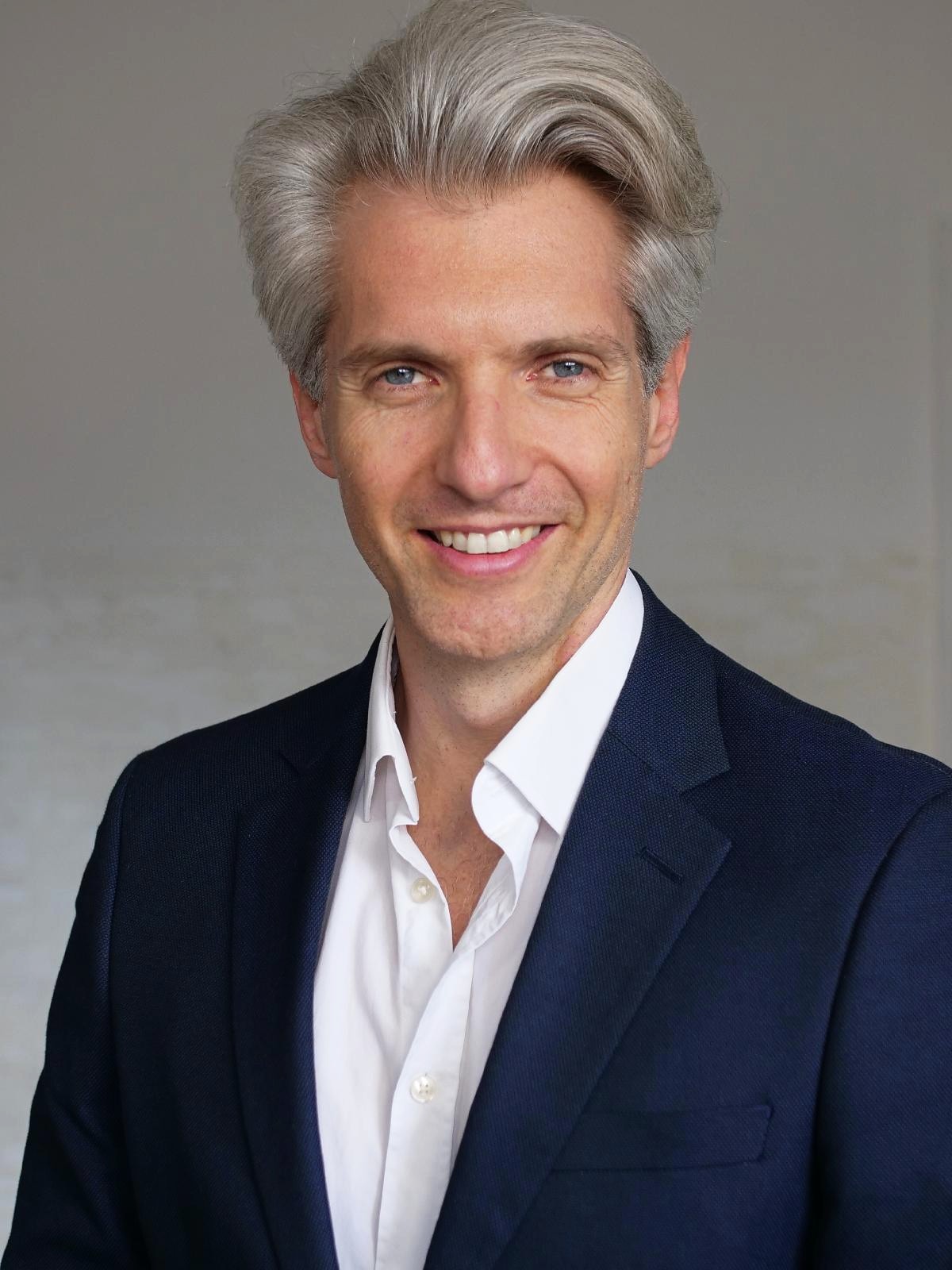
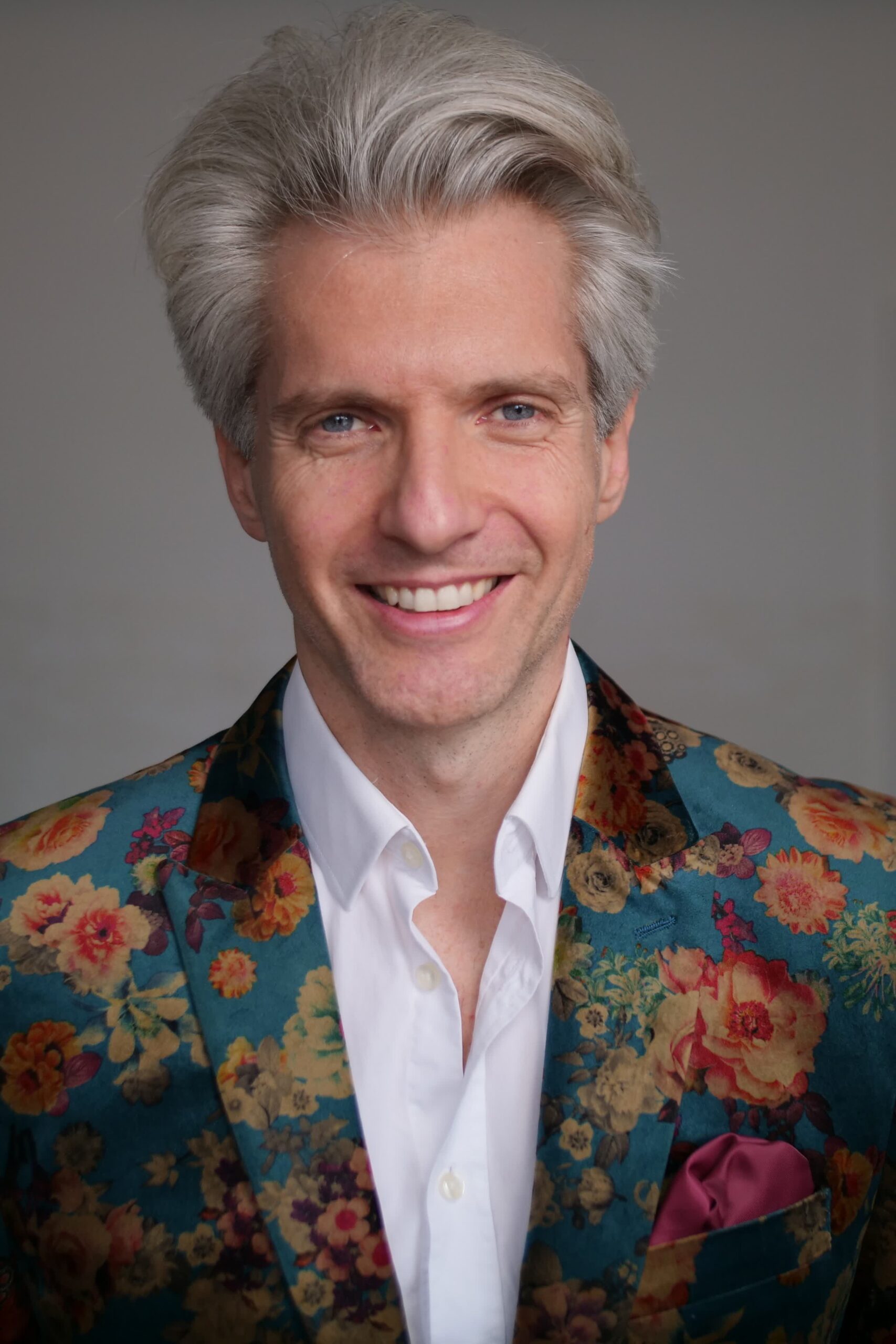
Physically striking and effortlessly distinguished – 185cm, athletic build, blue eyes, and silver fox colouring that has made him a consistently recognised face across European beauty and media circles – Marco carries a natural authority that reads instantly as cultured, affluent, and polished on camera.
His background as a qualified Engineer adds an intellectual depth and precision to his communication that elevates every performance beyond surface charm, giving him a rare credibility that works equally across luxury, lifestyle, and high-end entertainment formats. It is a quality that commissioners and casting directors have consistently responded to: he has been sought for posh, aspirational couple formats at the highest level of UK broadcasting.
Charismatic, internationally requested, and instinctively funny, Marco understands how to serve a format rather than compete with it – making him ideally suited to hybrid productions that demand spontaneity, personality, and professional adaptability in equal measure. His experience engaging real, unscripted contributors, and his ability to hold a scene with authority while remaining entirely believable, makes him a standout fit for entertainment formats where authenticity, presence, and genuine star quality are the product.
How Marco Dresses
Marco’s wardrobe is a deliberate balance between timeless structure and expressive individuality – a reflection of how he approaches everything.
You’ll usually find him anchored in crisp white shirts and tailored dark blue blazers: a nod to his appreciation for order, clarity, and classic professionalism. But style, for Marco, is never rigid. He softens the traditional base with light grey or beige trousers, and introduces a creative spark through bold blue-and-green or dark-blue-and-purple striped shirts.
His favourite statement piece – a gold camoscio leather blazer – captures his love for tactile luxury and independent design. Finished with pristine white sneakers, his look bridges sophisticated elegance and modern agility, proving that you can command a room while remaining completely comfortable in your own skin.

















FAQs
1. Who is Marco Biagioli in three words?
Genuine. Magnetic. Unexpected.
Although ask anyone who’s worked with me and they’ll probably say “hard to forget” – which I’ll take.
2. Italian or British – where do you actually belong?
Both, completely, and neither entirely, which is actually the most useful thing about me. I think in Italian and perform in English, which means I bring a European sensibility to British formats and a British precision to Italian ones. I’ve stopped trying to choose. The hyphen is the interesting part.
3. Engineer turned entertainer – how does that happen?
Engineering taught me that everything has a structure – a load-bearing logic underneath the surface. Performance is the same. When I walk into an improvised scene I’m not winging it, I’m engineering it in real time. The maths just got funnier.
4. What’s the first thing people notice about you in a room?
I’ve been told it’s the eyes. Then the hair. Then apparently the fact that I haven’t noticed anyone noticing – which I’m told is either very cool or very Italian. Possibly both.
5. Silver fox by nature or by choice – and are you glad?
Entirely by nature, and yes, absolutely glad. It arrived earlier than expected and I made a decision very quickly to own it completely rather than fight it. Best decision I’ve made in this industry. It turned what could have been an insecurity into a signature.
6. Talk show host, actor, presenter – what do you actually call yourself?
A performer. Everything else is just the format changing around the same essential thing – connecting with people in real time, reading the room, and making something happen that wasn’t there before. The job title is less interesting than what actually happens when the camera rolls.
7. You’ve worked across the UK, Italy, and internationally – which market feels most like home professionally?
The UK gave me discipline and the understanding that talent alone isn’t enough – you have to be professional, prepared, and completely reliable. Italy gave me warmth, instinct, and the ability to fill a room without trying. I need both operating simultaneously to feel like myself on set. London is where I live. The camera is where I’m home.
8. A TV commissioner once identified you and your partner as a “posh couple” on sight – is that a compliment or a prison sentence?
A compliment I’m still serving time for, and fine with that. What she saw were two people who carry themselves with a certain ease that reads as elevated on camera – and she was right to respond to it. Whether it’s actually posh is another conversation. The interesting thing is it happens consistently, across markets, without us trying – which tells you something about either the chemistry, the look, or the fact that we’ve both been somewhere interesting and look like we’re heading somewhere better. We’re currently developing that energy into something worthy of it. Watch this space.
9. What’s the role you were born to play but haven’t played yet?
Someone who appears to have everything completely under control while privately holding the whole thing together with his bare hands and a great suit. So essentially myself, but with a bigger budget and a writing room behind it.
10. Improvisation or script – where do you actually come alive?
Improvisation, without question – but I’ve learned that the best improvisation happens when you know the character so completely that you’re not improvising at all, you’re just being them. The freedom comes from the discipline underneath it. Give me a strong character and no script and I’m happy.
11. Deadpan comedy or big energy – which is the real you?
Deadpan is the tool. Big energy is what’s underneath it. The joke lands hardest when nobody sees it coming – and it never comes if you’re already performing “funny.” The best comedy I’ve ever done has been when I was playing it completely straight and trusting the situation to do the work. The audience laughs. I stay confused. That’s the formula.
12. You’ve been voted one of the most beautiful men in Italy by 70,000 women – does that help or complicate your acting career?
Both, in roughly equal measure. It opens doors that then require you to immediately prove you can do something once you’re through them. The looks get you the meeting. What happens in the room is entirely on you. I’ve always preferred it that way – I’d rather earn the job than be handed it. The 70,000 women were very kind. The casting directors needed more convincing.
13. What’s something people assume about you that’s completely wrong?
That I’m primarily decorative. The Engineer, the languages, the years of live television – none of that is visible from across a room. People clock the look first and sometimes stop there. The ones who’ve actually worked with me tend to recalibrate fairly quickly, which is a dynamic I find quietly entertaining every single time.
14. What do you know now about performance that you wish you’d known ten years ago?
That sincerity is the technique. I spent years thinking performance meant adding something – energy, comedy, presence. The real shift came when I understood it means removing everything false until what’s left is completely real. An audience can feel the difference immediately, even if they can’t articulate what they’re responding to. They’re responding to truth. Everything else is decoration.
15. How do you handle a scene when everything goes wrong?
I stay in the room. Literally and figuratively. The worst thing you can do when something unexpected happens is leave the scene in your head – start thinking about what went wrong, what comes next, how to recover. The best performances I’ve given have come from things going sideways and choosing to stay present with whatever is actually happening rather than what was supposed to happen. Chaos is just unplanned improvisation.
16. What does being an Engineer give you that drama school never could?
A completely unsentimental relationship with problems. Engineers don’t panic – they diagnose. When something isn’t working in a scene I don’t catastrophise, I ask: what’s the load-bearing element that’s failing? Fix that and everything else follows. It also means I’m very good at understanding a format structurally – knowing where the weight of a scene sits, what’s carrying the comedy, what’s redundant. It’s the same skill set. The units are just different.
17. You’ve filmed in the UK, worked in Italy, and been sought for projects in China – what’s the strangest cultural adjustment you’ve had to make on set?
China required almost no adjustment at all, and that itself was the revelation. I filmed there for 45 days on a production based across London, Beijing, and Shenzhen, and what I found was a level of professionalism, focus, and genuine collective commitment to the work that I’d put up against any set I’ve been on anywhere in the world. The welcome was extraordinary, warm, generous, and completely sincere. Everyone was there to make the best possible film, full stop. No politics, no ego, just craft.
18. If a production cast you purely on looks and got more than they bargained for – what did they get?
Someone who’d already read the format, understood the structure, identified the comedy, prepared three different character approaches, and was quietly ready to run the room from the moment they said action. The looks get me in. What I do with the next thirty seconds is entirely mine.
19. What’s the best way to work with you?
Directly and early. The projects that have worked best have always started with a conversation rather than a brief – when a brand or production understands what I bring and builds around that rather than slotting me into something already fixed, the result is consistently stronger for everyone. I’m collaborative by nature, internationally available, and I move fast. If something is right, I’ll know quickly and I’ll say so. If you have something interesting, reach out – I’d rather have ten conversations that go nowhere than miss the one that matters.
20. What kind of show doesn’t exist yet that you’d build around yourself if you could?
A format that puts a genuinely cultured, internationally experienced, bilingual presenter in situations that test whether elegance and wit can survive contact with complete chaos – and documents what happens when they do. Equal parts sophistication and absurdity. Think Michael Palin’s travel sensibility meets The Office’s deadpan engine, shot with the visual language of a luxury brand campaign. I’d watch it. More importantly, I’d be very good at it. Someone should call me.
21. How does your availability actually work?
I’m based in London and work across the UK, Italy, and internationally. I’m selective rather than simply busy – which means when I commit to something, it gets my full attention and professional energy rather than a fraction of it. I work across formats, languages, and markets, which means scheduling is genuinely flexible depending on the project. The answer is: if it’s the right project, availability becomes a conversation rather than an obstacle. Get in touch early and we’ll make it work.
22. You clearly work across multiple formats and markets, what makes you say yes to a project?
What makes me say yes is a combination of four things: a clear, ambitious creative vision; a production or brand that understands the difference between casting a face and building something around a person; and a genuine collaborative spirit, the kind where my input is valued, not just my availability; and of course a professional fee, because projects with low or no budget rarely go the distance.
I’m drawn to projects with a strong point of view, formats that haven’t been done, and brands that want their audience to feel something rather than just see something. If you’re coming to me with something you’re genuinely proud of and you’re looking for a partner rather than a prop, that’s the conversation I want to have.
The right project gets my full commitment, my professional network, and my instinct for what works on camera built across years of live television across three countries. That’s worth investing in properly, and I expect the people I work with to think the same way.
23. What do people who’ve worked with Marco say about him afterwards?
That he was more prepared than expected, easier to work with than anticipated, and more interesting than the brief suggested. I’ve built a career on exceeding the first impression, which, given the first impression, is saying something. The feedback I’m proudest of has never been about the look or the on-camera presence. It’s always been: “he understood what we were trying to do and made it better.” That’s the job. Everything else is packaging.
behind my success | Meet my soulmate · partner · my everything
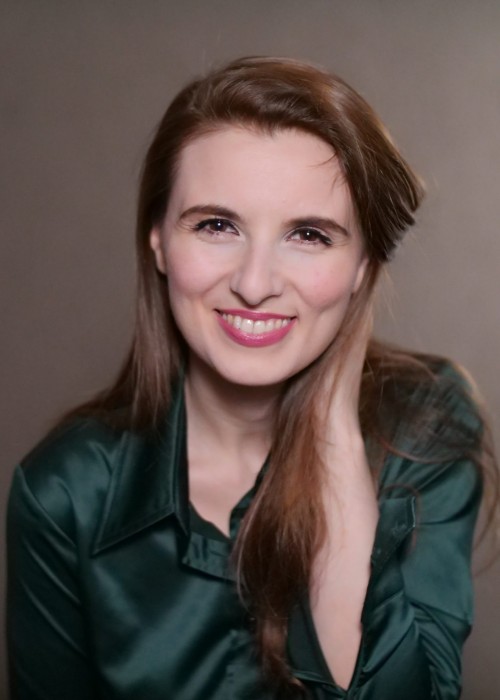
Erica Melargo. Always has been, always will be.
Behind every camera test, every audition, every project that came together and every one that didn’t, Erica has been there. Not as a manager or a strategist, but as the person who knows the difference between when I need encouragement and when I need honest feedback, and has never confused the two.
She is my constant, my compass, and the reason the version of Marco Biagioli that walks into a room with confidence actually exists. The elegance, the steadiness, the ability to stay grounded when things get complicated, a significant part of that is her.
Careers in this industry are built on talent and timing. But they’re sustained by the people who believe in you on the days when you’re not sure you believe in yourself. Erica is that person for me, and I don’t take a single day of that for granted.